San Jacinto
Opportunity
In the early 2000s, Nicaragua faced a critical challenge in its energy sector. The country relied heavily on imported fossil fuels, leaving it exposed to global price fluctuations and environmental concerns. With a growing population and rising electricity demand, both the government and private sector recognized the need to diversify the energy mix and invest in sustainable, locally sourced power.
The San Jacinto geothermal field, near the city of León, offered a natural solution. With high-temperature resources identified decades earlier and a proven 33.5 MW plant in operation since 2005, the site had clear potential for large-scale renewable energy development. Polaris Energy Nicaragua S.A. (PENSA), a subsidiary of Polaris Infrastructure Inc., envisioned expanding the facility to provide clean, reliable electricity to the national grid, supporting Nicaragua’s broader transition to sustainable energy.
Making this expansion a reality, however, required substantial financing, technical expertise, and careful risk management. The challenge was to fund the growth of the existing plant, build a new binary unit to capture additional energy, and ensure environmental and social standards were fully met.
Approach
CIFI stepped in as a key partner in October 2010, contributing USD 3.5 million under an International Finance Corporation (IFC) loan facility to support the second phase of the San Jacinto expansion. This phase increased the plant’s capacity by 33.5 MW, bringing the total installed capacity to 67 MW by the end of 2012. The project combined senior and subordinated debt, equity contributions, and support from international development finance institutions, including IFC, IDB, CABEI, Proparco, FMO, DEG, and BIO, with a total investment reaching USD 388 million.
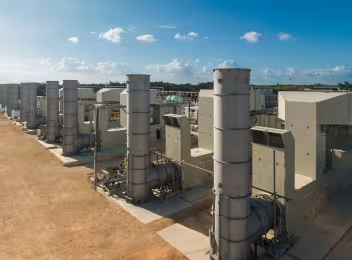
Over time, PENSA optimized the plant, replacing the original back-pressure units with high-efficiency Fuji turbines. By 2021, further expansion and financial strengthening were needed. CIFI led a refinancing effort, participating with USD 12 million in a USD 110 million senior long-term loan alongside FMO, DEG, and Proparco. These funds refinanced existing debt and financed a new 10 MW binary plant, which captures residual heat from the existing facility to generate additional electricity.
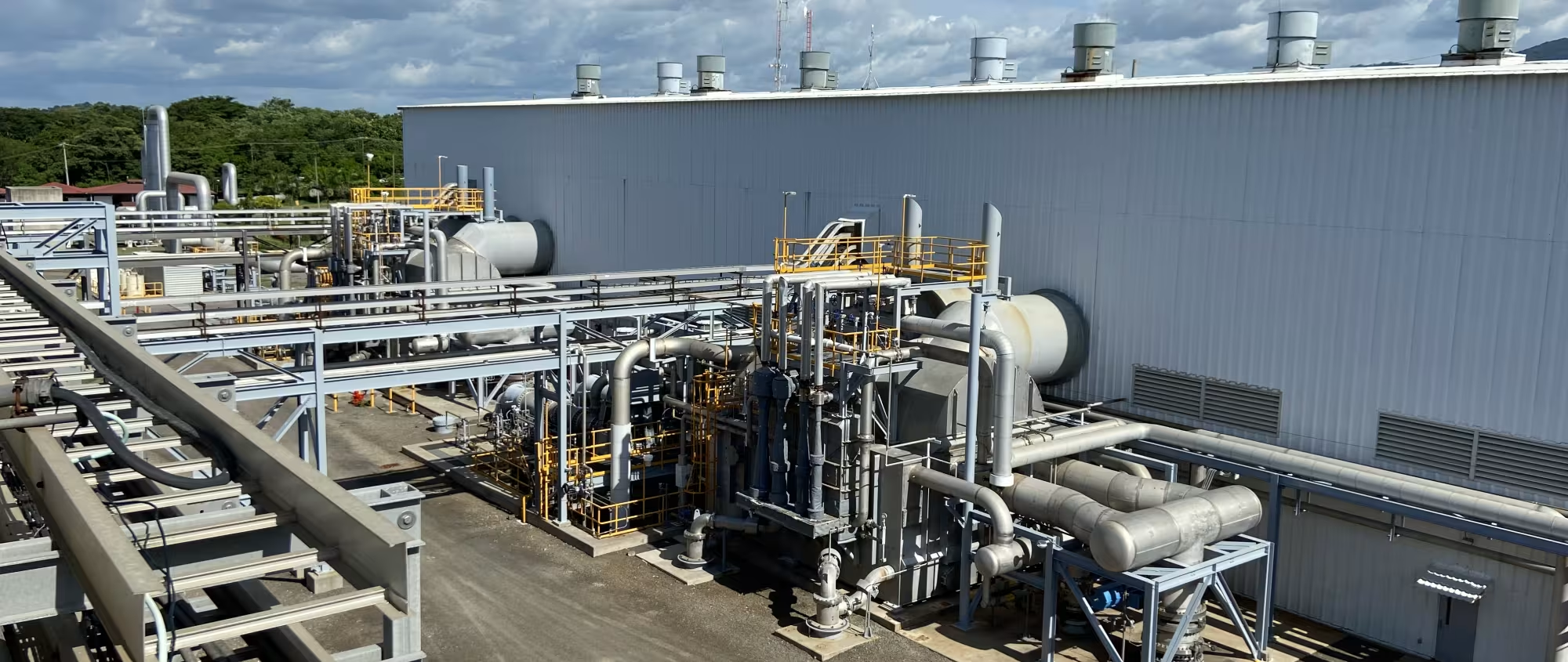
The technical approach was practical and resourceful. The binary plant was built next to the existing facility, avoiding the need for extra land or drilling. Ormat supplied the main equipment, while local contractors assisted with installation under PENSA’s management. Using an organic Rankine cycle, the binary plant turns residual geothermal heat into electricity, maximizing the resource and minimizing environmental impact.
Environmental and social responsibility were central throughout. The project followed IFC Performance Standards and Equator Principles, with rigorous environmental and social management systems in place. Local hiring, community engagement, and ongoing monitoring ensured that the project delivered tangible benefits to both people and the environment.
Outcome
The San Jacinto geothermal project now stands as a landmark for sustainable energy in Central America. With the binary plant completed, the facility’s total capacity reached 77 MW, producing around 484,000 MWh of clean electricity annually, enough to provide reliable power for over 851,000 people. This contribution to Nicaragua’s energy matrix directly supports Sustainable Development Goal (SDG) 7: Affordable and Clean Energy, by expanding access to reliable, renewable electricity.
The environmental impact has been substantial. The plant avoids more than 343,000 tons of CO₂ equivalent emissions each year, reducing reliance on imported fossil fuels and advancing SDG 13: Climate Action. Socially, the project created 163 jobs during construction and operation, prioritized local hiring, and invested in community programs in water, agriculture, and education. These efforts align with SDG 1: No Poverty, by promoting inclusive development and improving living conditions in surrounding communities.
San Jacinto demonstrates how strategic investment, technical innovation, and responsible management can turn natural resources into long-term benefits for communities, the environment, and the economy. CIFI’s leadership in structuring and financing the project was crucial, providing both capital and guidance to ensure the plant’s success and setting a benchmark for geothermal development in the region.
484K MWh
Energy generated per year
852k
People benefited from access to energy per year
343k tCO2e
Emissions avoided per year