Mezapa
Opportunity
In the early 2010s, Honduras faced a pressing challenge: the country needed more renewable energy and better access to reliable electricity for its growing population. Heavy reliance on fossil fuels not only drove up emissions but also left the country vulnerable to swings in global oil prices. At the same time, the government and regional development banks were looking for ways to attract sustainable infrastructure investments that could reduce environmental impact and support long-term economic growth.
The Mezapa River, in southeastern Honduras, offered a natural solution. Its steady flow and favorable terrain made it an ideal spot for a run-of-the-river hydroelectric plant. SEMSA, a local company deeply rooted in the Honduran industrial sector, saw an opportunity to transform this river into a source of clean, dependable electricity. Their vision was to provide power for thousands of people while contributing to the country’s climate goals.
Approach
CIFI was invited to join the effort by the Central American Bank for Economic Integration (CABEI) and quickly became a central partner in making the Mezapa Hydroelectric Project a reality. The journey began with an initial USD 13 million loan, co-arranged with CABEI, which helped fund the early stages of construction and operational setup for the 9.4 MW plant. The project was part of a larger investment initiative with a total cost of USD 122 million.
The financing was structured in stages to provide both flexibility and security. It began with a letter of credit, followed by a construction loan, and finally a term loan of up to 12 years. These arrangements offered confidence to both the sponsors and lenders, while revenue and collateral protections ensured financial stability throughout the project’s life.
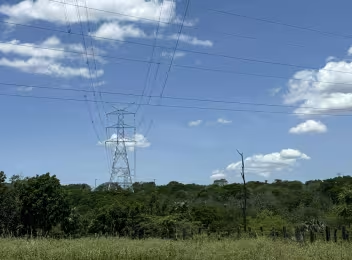
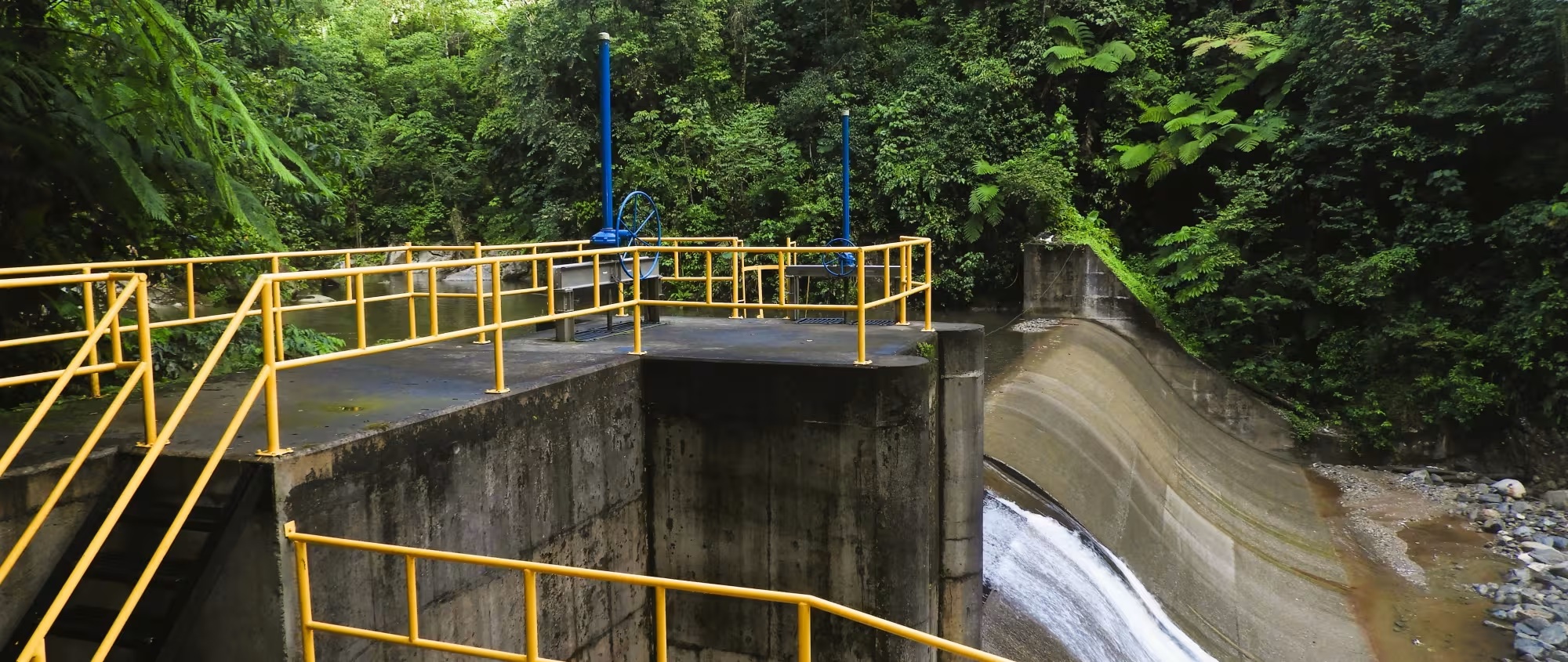
On the ground, the focus was on turning the river’s natural energy into electricity for homes and businesses. The plan included building a small dam to divert water, a canal to guide it, and a powerhouse to generate energy. New transmission lines and upgrades to existing ones connected the plant to the national grid, making sure the electricity reached local communities efficiently. Construction was handled by Elecnor, a trusted Spanish company, under a contract that guaranteed both cost control and quality. Elecnor also operated the plant during its first year, ensuring the transition from construction to full operations was smooth and reliable.
As the project progressed, CIFI increased its commitment, adding USD 8 million in 2015 as a sign of confidence in the plant’s performance. In 2017, CIFI led a refinancing effort, participating with USD 13 million in a USD 21.8 million facility, further securing the project’s long-term financial stability.
Outcome
The Mezapa Hydroelectric Project became a reality with construction starting in 2011 and operations beginning in January 2015. Today, the plant produces 9.4 MW of clean energy, generating roughly 46,000 MWh annually. It brings reliable electricity to nearly 74,000 people while preventing close to 29,000 tCO₂e emissions each year. This contributes directly to Sustainable Development Goal (SDG) 13: Climate Action, supporting Honduras’s environmental targets through reduced greenhouse gas emissions.
The project’s benefits go beyond energy. It created 230 jobs during construction and operations, supported local communities through engagement programs, and proved that private and public actors could collaborate effectively in renewable energy infrastructure. These efforts align with SDG 8: Decent Work and Economic Growth, by promoting employment and capacity building in the region. Thanks to its stable cash flows and solid financial design, the plant maintains consistent debt service coverage even during periods of variable water flow, reinforcing the importance of resilient infrastructure in line with SDG 11: Sustainable Cities and Communities.
Mezapa is now a model for sustainable energy investment in Central America. CIFI’s leadership in structuring, financing, and managing the project was crucial, not just for mobilizing capital, but for ensuring the plant met high standards for social and environmental responsibility. The success of Mezapa demonstrates the transformative potential of thoughtfully planned renewable energy projects and highlights how strategic partnerships can drive meaningful, long-term development while contributing to global goals such as SDG 7: Affordable and Clean Energy and SDG 5: Gender Equality through inclusive practices and community engagement.
45k MWh
Energy generated per year
74k
People benefited from access to energy per year
29k tCO2e
Emissions avoided per year